




Blog
Millets vs Rice and Wheat: Which is Healthier?

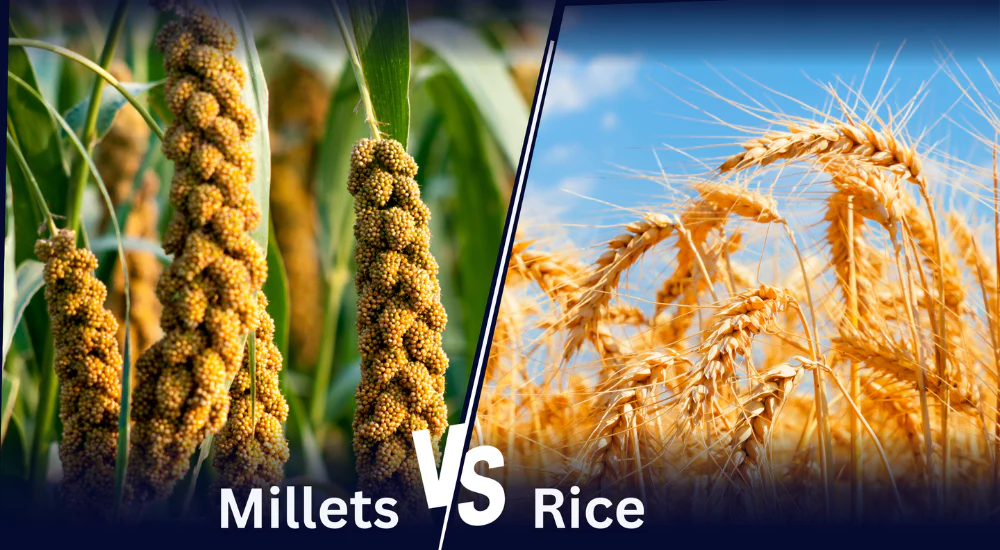
For decades, rice and wheat have dominated daily diets across the world, forming the foundation of staple meals in many countries. However, in recent years, millets have re-emerged as a powerful alternative, gaining global recognition for their exceptional nutritional value and sustainability. As consumers become more health-conscious and aware of food security challenges, the comparison between millets, rice, and wheat has become increasingly relevant.
Millets are often considered nutritionally superior to both rice and wheat. Unlike polished white rice, which loses most of its fiber and micronutrients during processing, millets are typically consumed in their whole form. They are naturally rich in dietary fiber, which supports digestion, improves gut health, and helps maintain stable blood sugar levels. This makes millets particularly beneficial for individuals managing diabetes or aiming for weight control. In contrast, refined wheat and white rice have a higher glycemic index, meaning they can cause rapid spikes in blood sugar levels.
Protein and mineral content is another area where millets stand out. Many varieties of millets contain higher levels of iron, calcium, magnesium, and phosphorus compared to rice and wheat. For example, finger millet (ragi) is widely recognized for its high calcium content, making it an excellent choice for bone health. Millets are also gluten-free, making them a safe and nutritious option for individuals with gluten intolerance or celiac disease, whereas wheat contains gluten and may not be suitable for everyone.
From a sustainability perspective, millets have a clear advantage. They require significantly less water to grow compared to rice and can thrive in arid and semi-arid climates with minimal inputs. Wheat and rice cultivation often demand high irrigation and chemical usage, which can strain natural resources. Millets are resilient crops that can grow in poor soil conditions and withstand harsh weather, making them an environmentally friendly and climate-smart choice for the future.
In terms of versatility, millets can be used in a wide range of products including flour, breakfast cereals, snacks, bakery items, and ready-to-eat foods. While rice and wheat remain widely consumed due to habit and availability, millets are increasingly being incorporated into modern diets as consumers look for healthier and more diverse food options.
Ultimately, while rice and wheat continue to play an important role in global food consumption, millets offer a more nutrient-dense, sustainable, and health-supportive alternative. As awareness grows worldwide, millets are not just being seen as traditional grains but as smart grains for the future of global nutrition and food security.